‘I Shouldn’t Have to Beg for My Life’

A misunderstood disease and lack of support leaves one woman planning her medically assisted death. There may soon be more.

The Tyee

Moira Wyton

On a warm Saturday afternoon in May, Madeline was watching her friend’s young daughter open her birthday gifts. But as the girl sat under a tree in the park, tearing wrapping paper off a book about drawing horses, Madeline’s heart was breaking. “I don’t know if I will get to see her next birthday.”

Madeline has been preparing for medical assistance in dying, or MAID, for over a year, and says she could choose to die as soon as late July if she does not come up with the money to cover treatments for her complex mitochondrial and post-viral conditions. . . .

With relatively low funding levels for ME/CFS research, few specialized clinics and little coverage for emerging treatments that can help some patients, Madeline says B.C.’s medical system doesn’t properly recognize her illness, which affects about 77,000 British Columbians. . .

She can’t afford the necessary treatments on the $1,358 she receives per month as disability assistance, nor the support she needs with housework and personal care. But her diminished quality of life qualifies her for MAID.

“They would rather see me die than recognize my illness and pay for the treatments that keep me alive,” said Madeline. “My death is no more inevitable than a diabetic’s who can’t get insulin.” . . . continue reading

The ethical minefield of COVID-19 vaccination: Informed consent and the obligations of doctors

Australian Broadcasting Corporation

Margaret Somerville

The ethical minefield of COVID-19 vaccination: Informed consent and the obligations of doctors

The COVID-19 pandemic has raised a multitude of complex ethical issues — and new ones present themselves daily. These issues, including those related to vaccination, arise at four levels: micro or individual (for example, when a doctor vaccinates a patient); meso or institutional (regarding, for instance, a hospital’s or aged care residence’s policy on vaccinating staff); macro or societal ( a government’s decisions or public health regulations governing distribution of vaccines and access to vaccination); and mega or global (such as a nation’s obligations to provide vaccines to those in developing countries, which are without vaccines).

In many COVID-19 related decision-making situations at each of these levels, decision makers face what is called in bioethics a “world of competing sorrows” — that is, decision making in which there is no “no harm” option, but in which, instead, they must choose to whom harm will be allocated. The ethical difficulties are exacerbated when the harms and benefits do not accrue to the same people or, at least, not in equal measure. A striking example of such a situation at the macro or societal level would be the use of “lockdowns”, when the choice is between protecting public health and inflicting serious economic harm.

What I want to focus on here is a particular micro- level issue: that of a healthcare professional’s obligation to obtain a person’s informed consent to COVID-19 vaccination.

Failure to obtain an informed consent to, or an informed refusal of, medical treatment — which includes vaccination — is medical negligence (medical malpractice). Informed consent to or refusal of medical treatment has three requirements: competence, information, and voluntariness. There is a wealth of research on what is needed to establish each element, but here is a brief summary. . . Continue reading

Conscience Project critiques Ontario Physicians College euthanasia/assisted suicide policy

Referral, urgent situations, death certificates, criminal law

News Release

For immediate release

Protection of Conscience Project

Conscience Project critiques Ontario Physicians College euthanasia/assisted suicide policy

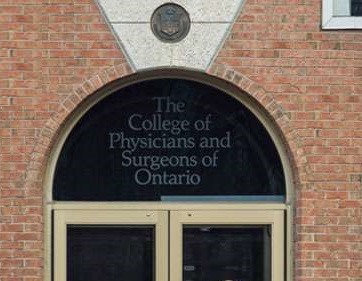
Powell River, BC. (28 April, 2021) The 2019 decision of the Ontario Court of Appeal supporting the College of Physicians and Surgeons of Ontario was not the last word on the subject of physician freedom of conscience.

That message was delivered to the College by the Protection of Conscience Project in a submission responding to the College’s request for public feedback on its policy, Medical Assistance in Dying (MAiD). The submission focuses primarily on the College demand that physicians unwilling to provide euthanasia or assisted suicide (EAS) for reasons of conscience provide an “effective referral”: that is, connect the patient directly with someone willing to provide a lethal injection or assist with suicide.

The submission on MAiD addresses three points unique to euthanasia and assisted suicide.

Conflicts in urgent situations: If a patient is approved for EAS at some future date, a sudden deterioration of the patient’s condition may cause the patient to ask for immediate relief by EAS. In the absence of an EAS practitioner, other practitioners may be willing to alleviate the patient’s distress by palliative interventions, but not to provide EAS. The Project suggests how this conflict can be avoided.

Falsifying death certificates: Falsification of death certificates is contrary to accepted international standards and can be considered deceptive, unethical or professionally ill-advised. The Project suggests how EAS practitioners unwilling to falsify death certificates can be accommodated by the College and Office of the Chief Coroner even if current government policy does not change.

Criminal law limits on College policy: The Project’s position is that the College cannot proceed against practitioners who, having the opinion that a patient is not eligible for EAS, refuse to do anything that would entail criminal responsibility for homicide/assisted suicide, including “effective referral.” Further, to advise or attempt to coerce them to present EAS as treatment options or to participate by effective referral would seem to be a criminal offence. Finally, since counselling suicide remains a criminal offence, it appears that practitioners cannot be compelled to present assisted suicide or MaiD as treatment options unless a patient has expressed an interest in the services.

The College’s clarification that it does not require objecting practitioners to personally kill their patients is welcome. However, the Project’s position is that this ought to be the norm in a democratic society, not a “concession”or an element in the “accommodation” of freedom of conscience.

While the submission includes specific policy recommendations within the existing MAiD policy framework, it recommends that the College adopt a single protection of conscience policy in line with “the basic theory” of the Canadian Charter of Rights affirmed by the Supreme Court of Canada and consistent with rational moral pluralism. Such a generally applicable policy is included in the simultaneous Project submission to the College on Professional Obligations and Human Rights.

Public consultations on Professional Obligations and Human Rights [Consultation Page] and Medical Assistance in Dying [Consultation Page] are open until 14 May, 2021.

Contact: Sean Murphy,
Administrator, Protection of Conscience Project
protection@consciencelaws.org

Kildare GP linked illness to wearing facemask, High Court told

Kildare Nationalist

A Co Kildare GP who was suspended by the Medical Council after he failed to refer patients for Covid-19 tests is alleged to have told a patient with chest complaints that his symptoms were caused by his facemask, a High Court judgment shows.

Last month Ms Justice Mary Irvine granted an application by the Medical Council to suspend Dr Gerard Waters, a GP at the Whitethorn Clinic in Celbridge, following allegations surrounding the Covid-19 vaccine and adherence to public health measures.

The High Court published its judgment in full on Thursday following a further application by the Medical Council.

The judgment shows Dr Waters refused to administer Covid-19 vaccines on the basis he was a “conscientious objector”, but that he did not take steps to refer patients to other doctors. . . continue reading