The University of Manitoba’s repulsive pantomime of justice against a conservative student

The National Post

Colby Cosh

Today’s column has to start with a tip of the cap to my colleague Tyler Dawson, who has delivered a fine account of an extraordinary Manitoba Court of Queen’s Bench case that was decided last week. It concerns a struggle between medical student Rafael Zaki and the University of Manitoba’s Max Rady College of Medicine, which expelled Zaki in the summer of 2020 after about a year’s worth of disciplinary procedures.

Zaki’s offence was a total of three Facebook posts that attracted anonymous complaints from 18 fellow students: two were written in support of the right to bear arms, and the third was an extended, uncompromising anti-abortion monologue that seems to have touched on just about every pro-life argument ever devised, irrespective of consistency or convincingness. . . continue reading

Manitoba medical student expelled over ‘pro-gun and pro-life’ Facebook posts wins court ruling

Rafael Zaki said he was expelled for his conscientious and religious beliefs. The judge said the university appeared biased in its decision

The National Post

Tyler Dawson

A Manitoba medical student who was expelled after failing to satisfactorily apologize for his controversial views on guns and abortion has been granted a new adjudication of his expulsion.

Rafael Zaki, a Coptic Orthodox student at the University of Manitoba who was supposed to graduate in 2022, posted three items on his Facebook page in February 2019. He was expelled in August 2019

One year later, after losing two appeals within the university system, Zaki asked Manitoba’s Court of Queen’s Bench to review the decision made by the University Discipline Committee. Zaki said he was expelled “for holding conscientious and religious beliefs that abortion is harmful.” . . . continue reading

Groups representing doctors, nurses call for mandatory vaccination of health-care workers

France, Italy and Greece will make vaccinations mandatory for health-care workers

Nick Boisvert

The Canadian Medical Association (CMA) and the Canadian Nurses Association (CNA) are jointly calling for COVID-19 vaccinations to be made mandatory for health-care workers.

The two organizations today joined a growing number of calls to make vaccines a mandatory condition of employment in the health care sector.

“As health providers, we have a fundamental duty of care towards our patients and the public. There is significant evidence that vaccines are safe and effective and as health professionals who are leading the vaccination campaigns, it is the right call and an appropriate step,” said CMA president Dr. Ann Collins. . . continue reading

‘I Shouldn’t Have to Beg for My Life’

A misunderstood disease and lack of support leaves one woman planning her medically assisted death. There may soon be more.

The Tyee

Moira Wyton

On a warm Saturday afternoon in May, Madeline was watching her friend’s young daughter open her birthday gifts. But as the girl sat under a tree in the park, tearing wrapping paper off a book about drawing horses, Madeline’s heart was breaking. “I don’t know if I will get to see her next birthday.”

Madeline has been preparing for medical assistance in dying, or MAID, for over a year, and says she could choose to die as soon as late July if she does not come up with the money to cover treatments for her complex mitochondrial and post-viral conditions. . . .

With relatively low funding levels for ME/CFS research, few specialized clinics and little coverage for emerging treatments that can help some patients, Madeline says B.C.’s medical system doesn’t properly recognize her illness, which affects about 77,000 British Columbians. . .

She can’t afford the necessary treatments on the $1,358 she receives per month as disability assistance, nor the support she needs with housework and personal care. But her diminished quality of life qualifies her for MAID.

“They would rather see me die than recognize my illness and pay for the treatments that keep me alive,” said Madeline. “My death is no more inevitable than a diabetic’s who can’t get insulin.” . . . continue reading

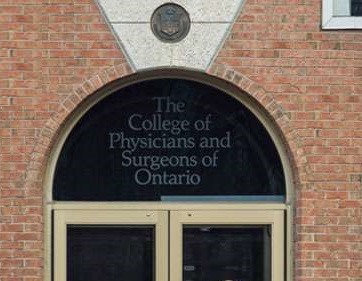
Conscience Project critiques Ontario Physicians College euthanasia/assisted suicide policy

Referral, urgent situations, death certificates, criminal law

News Release

For immediate release

Protection of Conscience Project

Conscience Project critiques Ontario Physicians College euthanasia/assisted suicide policy

Powell River, BC. (28 April, 2021) The 2019 decision of the Ontario Court of Appeal supporting the College of Physicians and Surgeons of Ontario was not the last word on the subject of physician freedom of conscience.

That message was delivered to the College by the Protection of Conscience Project in a submission responding to the College’s request for public feedback on its policy, Medical Assistance in Dying (MAiD). The submission focuses primarily on the College demand that physicians unwilling to provide euthanasia or assisted suicide (EAS) for reasons of conscience provide an “effective referral”: that is, connect the patient directly with someone willing to provide a lethal injection or assist with suicide.

The submission on MAiD addresses three points unique to euthanasia and assisted suicide.

Conflicts in urgent situations: If a patient is approved for EAS at some future date, a sudden deterioration of the patient’s condition may cause the patient to ask for immediate relief by EAS. In the absence of an EAS practitioner, other practitioners may be willing to alleviate the patient’s distress by palliative interventions, but not to provide EAS. The Project suggests how this conflict can be avoided.

Falsifying death certificates: Falsification of death certificates is contrary to accepted international standards and can be considered deceptive, unethical or professionally ill-advised. The Project suggests how EAS practitioners unwilling to falsify death certificates can be accommodated by the College and Office of the Chief Coroner even if current government policy does not change.

Criminal law limits on College policy: The Project’s position is that the College cannot proceed against practitioners who, having the opinion that a patient is not eligible for EAS, refuse to do anything that would entail criminal responsibility for homicide/assisted suicide, including “effective referral.” Further, to advise or attempt to coerce them to present EAS as treatment options or to participate by effective referral would seem to be a criminal offence. Finally, since counselling suicide remains a criminal offence, it appears that practitioners cannot be compelled to present assisted suicide or MaiD as treatment options unless a patient has expressed an interest in the services.

The College’s clarification that it does not require objecting practitioners to personally kill their patients is welcome. However, the Project’s position is that this ought to be the norm in a democratic society, not a “concession”or an element in the “accommodation” of freedom of conscience.

While the submission includes specific policy recommendations within the existing MAiD policy framework, it recommends that the College adopt a single protection of conscience policy in line with “the basic theory” of the Canadian Charter of Rights affirmed by the Supreme Court of Canada and consistent with rational moral pluralism. Such a generally applicable policy is included in the simultaneous Project submission to the College on Professional Obligations and Human Rights.

Public consultations on Professional Obligations and Human Rights [Consultation Page] and Medical Assistance in Dying [Consultation Page] are open until 14 May, 2021.

Contact: Sean Murphy,
Administrator, Protection of Conscience Project
protection@consciencelaws.org