Ontario College of Physicians policy challenged

Forcing physicians out of Covid fight not in public interest

News Release

For immediate release

Protection of Conscience Project
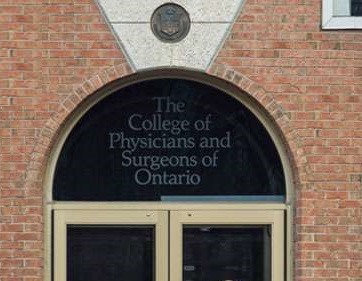
Ontario College of Physicians policy challenged

Powell River, B.C. (28 April, 2021) The 2019 decision of the Ontario Court of Appeal supporting the College of Physicians and Surgeons of Ontario was not the last word on the subject of physician freedom of conscience.

That message was delivered to the College by the Protection of Conscience Project in a submission responding to the College’s request for public feedback on its policy, Professional Obligations and Human Rights (POHR).

The submission includes a cautionary note about the potential implications of human rights law for practitioners providing euthanasia and assisted suicide. However, the primary focus is on the College demand that physicians unwilling to provide a service or procedure for reasons of conscience provide an “effective referral”: that is, connect the patient directly with someone willing to do what they consider immoral/unethical.

Practitioners who object to providing a service typically provide information and work cooperatively with patients and others in relation to patient access to services. While willing to respectfully cooperate, they are unwilling to collaborate by doing something that makes them a party to what they consider wrongful and/or harmful. The distinctions between providing information vs. providing a service and between cooperation vs. collaboration enable an approach that accommodates both patients and practitioners, argues the Project.

However, the College is clearly confused about such critical distinctions. Citing College policy and reasoning, the submission states, “the College’s assertion that effective referral for euthanasia/assisted suicide does not ‘signal’ endorsement or support for the procedures [Advice:MAiD] is either disingenuous or the product of badly muddled wishful thinking.”

“The College does not even correctly apply its own definition of effective referral in its companion policy document,” observes Sean Murphy, Administrator of the Project.

According to the College, physicians unwilling to comply with its effective referral policy should restrict their practices to specialties like hair restoration.[1] This would force all objecting physicians out of general practice.

“To put it in a currently relevant perspective,” says Murphy, “the College would have them terminate all Covid 19 pandemic activities and take up podiatry or aviation medicine. This is hardly consistent with ensuring access to health care or protecting the public interest.”

The Project recommends that the College adopt a single protection of conscience policy in line with “the basic theory” of the Canadian Charter of Rights affirmed by the Supreme Court of Canada and consistent with rational moral pluralism. The submission includes a such general policy, drawing on policy documents from the Canadian Medical Association, Canadian Nurses’ Association, Catholic Health Association of Canada and the Canadian Medical Protective Association.

The Protection of Conscience Project has also made a submission about College’s policy on euthanasia and assisted suicide, Medical Assistance in Dying. Public consultations on Professional Obligations and Human Rights [Consultation Page] and Medical Assistance in Dying [Consultation Page] are open until 14 May, 2021.

Notes

  1. Christian Medical and Dental Society of Canada v. College of Physicians and Surgeons of Ontario, 2019 ONCA 393 (CanLII) at para 184.

Contact: Sean Murphy,
Administrator, Protection of Conscience Project
protection@consciencelaws.org

Canada has a new law on medical assistance in dying. Here’s what it means

The Standard

Jacques Gallant

More Canadians will now have access to medical assistance in dying.

The federal government’s Bill C-7, which revamps the country’s assisted dying regime, received royal assent and became law, after the Senate signalled its agreement Wednesday with the House of Commons on the contents of the bill.

“This law will respect the autonomy of Canadians while protecting the vulnerable,” tweeted Justice Minister David Lametti following the Senate vote.

The bill’s passage follows more than a year of bitter debate over medical assistance in dying (MAiD) in Canada. Some have argued that the government’s previous MAiD law did not go far enough and excluded too many people, while others have strenuously denounced C-7 as going too far and sending the message that the lives of people with disabilities have less value. . . continue reading

Canadian MP introduces protection of conscience bill

Bill C-268 (2016)  Protection of Freedom of Conscience Act

Sean Murphy*

Conservative Member of Parliament Kelly Block has introduced a bill that would make it a crime to coerce medical or nurse practitioners or other health professionals to take part, directly or indirectly, in “medical assistance in dying.” The preamble of the bill makes clear that it is intended as a protection of conscience measure.

The text of the bill is much the same as a bill proposed by MP Mark Warawa in 2016.

“Medical assistance in dying” means euthanasia and assisted suicide provided by physicians or nurse practitioners. Since it is considered medical treatment in Canada, it falls within provincial jurisdiction over health care. Similarly, provinces have primary jurisdiction over human rights like freedom of conscience. Thus, the federal government has been easily able to refuse amendments like this on the grounds that they unconstitutionally trespass on provincial jursidiction.

The federal government has constitutional jursidiction in criminal law and could make it a crime to compel someone to be a party to homicide and suicide. Since “medical assistance in dying” is non-culpable homicide and non-cuplpable assisted suicide, such a law would provide protection for health care professionals unwilling to be parties to killing their patients or helping them commit suicide, without intruding upon provincial jurisdiction.

The Protection of Conscience Project has repeatedly made this suggestion to Canadian parliamentarians, but its submissions have been ignored.

It is remarkable that the Canadian government clearly believes it is acceptable to compel citizens to become parties to homicide — killing other people — and punish them if they refuse. It is, perhaps, even more remarkable that Canadians are unwilling to talk openly about this.

Lack of evidence-based medicine in debate around new MAID law should concern Canadians

CBC News

Dr. Mark Sinyor

I recently had the privilege of testifying before the Senate of Canada in their deliberations about medical assistance in dying (MAID) legislation. The specific question before them was whether to allow the practice as a treatment for mental illness, which the Senate voted to recommend following an 18-month “sunset clause,” and the House of Commons says it would support with a two-year phase-in.

I have no personal objection to MAID in principle. But as a doctor and a psychiatrist who believes in evidence-based medicine, I found both the hearing and the result horrifying.

Bill C-7 would extend MAID to those experiencing intolerable suffering and who are not approaching the natural end of their lives, including those with mental illness. . . [Full text]

Mental illness should never be a death sentence

National Newswatch

Margaret Eaton

Anyone living with mental illness knows it can absolutely be grievous and even unbearable. However, what sets mental illness apart from all other types of suffering is that there always remains the hope of recovery. That’s why the Senate’s amendment to C-7, the assisted dying bill, is so concerning.

People with a mental health problem or illness need assistance to live and thrive, not hasten death. . . [Full text]