Forcing physicians out of Covid fight not in public interest
News Release
For immediate release
Protection of Conscience Project
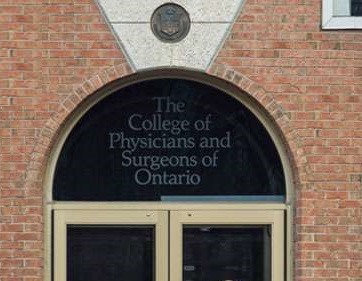
Powell River, B.C. (28 April, 2021) The 2019 decision of the Ontario Court of Appeal supporting the College of Physicians and Surgeons of Ontario was not the last word on the subject of physician freedom of conscience.
That message was delivered to the College by the Protection of Conscience Project in a submission responding to the College’s request for public feedback on its policy, Professional Obligations and Human Rights (POHR).
The submission includes a cautionary note about the potential implications of human rights law for practitioners providing euthanasia and assisted suicide. However, the primary focus is on the College demand that physicians unwilling to provide a service or procedure for reasons of conscience provide an “effective referral”: that is, connect the patient directly with someone willing to do what they consider immoral/unethical.
Practitioners who object to providing a service typically provide information and work cooperatively with patients and others in relation to patient access to services. While willing to respectfully cooperate, they are unwilling to collaborate by doing something that makes them a party to what they consider wrongful and/or harmful. The distinctions between providing information vs. providing a service and between cooperation vs. collaboration enable an approach that accommodates both patients and practitioners, argues the Project.
However, the College is clearly confused about such critical distinctions. Citing College policy and reasoning, the submission states, “the College’s assertion that effective referral for euthanasia/assisted suicide does not ‘signal’ endorsement or support for the procedures [Advice:MAiD] is either disingenuous or the product of badly muddled wishful thinking.”
“The College does not even correctly apply its own definition of effective referral in its companion policy document,” observes Sean Murphy, Administrator of the Project.
According to the College, physicians unwilling to comply with its effective referral policy should restrict their practices to specialties like hair restoration.[1] This would force all objecting physicians out of general practice.
“To put it in a currently relevant perspective,” says Murphy, “the College would have them terminate all Covid 19 pandemic activities and take up podiatry or aviation medicine. This is hardly consistent with ensuring access to health care or protecting the public interest.”
The Project recommends that the College adopt a single protection of conscience policy in line with “the basic theory” of the Canadian Charter of Rights affirmed by the Supreme Court of Canada and consistent with rational moral pluralism. The submission includes a such general policy, drawing on policy documents from the Canadian Medical Association, Canadian Nurses’ Association, Catholic Health Association of Canada and the Canadian Medical Protective Association.
The Protection of Conscience Project has also made a submission about College’s policy on euthanasia and assisted suicide, Medical Assistance in Dying. Public consultations on Professional Obligations and Human Rights [Consultation Page] and Medical Assistance in Dying [Consultation Page] are open until 14 May, 2021.
Notes
- Christian Medical and Dental Society of Canada v. College of Physicians and Surgeons of Ontario, 2019 ONCA 393 (CanLII) at para 184.
Contact: Sean Murphy,
Administrator, Protection of Conscience Project
protection@consciencelaws.org