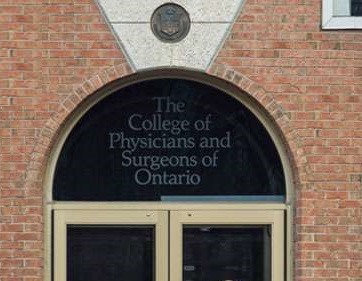
Conscience Project critiques Ontario Physicians College euthanasia/assisted suicide policy

Referral, urgent situations, death certificates, criminal law

News Release

For immediate release

Protection of Conscience Project

Conscience Project critiques Ontario Physicians College euthanasia/assisted suicide policy

Powell River, BC. (28 April, 2021) The 2019 decision of the Ontario Court of Appeal supporting the College of Physicians and Surgeons of Ontario was not the last word on the subject of physician freedom of conscience.

That message was delivered to the College by the Protection of Conscience Project in a submission responding to the College’s request for public feedback on its policy, Medical Assistance in Dying (MAiD). The submission focuses primarily on the College demand that physicians unwilling to provide euthanasia or assisted suicide (EAS) for reasons of conscience provide an “effective referral”: that is, connect the patient directly with someone willing to provide a lethal injection or assist with suicide.

The submission on MAiD addresses three points unique to euthanasia and assisted suicide.

Conflicts in urgent situations: If a patient is approved for EAS at some future date, a sudden deterioration of the patient’s condition may cause the patient to ask for immediate relief by EAS. In the absence of an EAS practitioner, other practitioners may be willing to alleviate the patient’s distress by palliative interventions, but not to provide EAS. The Project suggests how this conflict can be avoided.

Falsifying death certificates: Falsification of death certificates is contrary to accepted international standards and can be considered deceptive, unethical or professionally ill-advised. The Project suggests how EAS practitioners unwilling to falsify death certificates can be accommodated by the College and Office of the Chief Coroner even if current government policy does not change.

Criminal law limits on College policy: The Project’s position is that the College cannot proceed against practitioners who, having the opinion that a patient is not eligible for EAS, refuse to do anything that would entail criminal responsibility for homicide/assisted suicide, including “effective referral.” Further, to advise or attempt to coerce them to present EAS as treatment options or to participate by effective referral would seem to be a criminal offence. Finally, since counselling suicide remains a criminal offence, it appears that practitioners cannot be compelled to present assisted suicide or MaiD as treatment options unless a patient has expressed an interest in the services.

The College’s clarification that it does not require objecting practitioners to personally kill their patients is welcome. However, the Project’s position is that this ought to be the norm in a democratic society, not a “concession”or an element in the “accommodation” of freedom of conscience.

While the submission includes specific policy recommendations within the existing MAiD policy framework, it recommends that the College adopt a single protection of conscience policy in line with “the basic theory” of the Canadian Charter of Rights affirmed by the Supreme Court of Canada and consistent with rational moral pluralism. Such a generally applicable policy is included in the simultaneous Project submission to the College on Professional Obligations and Human Rights.

Public consultations on Professional Obligations and Human Rights [Consultation Page] and Medical Assistance in Dying [Consultation Page] are open until 14 May, 2021.

Contact: Sean Murphy,
Administrator, Protection of Conscience Project
protection@consciencelaws.org

Ontario College of Physicians policy challenged

Forcing physicians out of Covid fight not in public interest

News Release

For immediate release

Protection of Conscience Project

Ontario College of Physicians policy challenged

Powell River, B.C. (28 April, 2021) The 2019 decision of the Ontario Court of Appeal supporting the College of Physicians and Surgeons of Ontario was not the last word on the subject of physician freedom of conscience.

That message was delivered to the College by the Protection of Conscience Project in a submission responding to the College’s request for public feedback on its policy, Professional Obligations and Human Rights (POHR).

The submission includes a cautionary note about the potential implications of human rights law for practitioners providing euthanasia and assisted suicide. However, the primary focus is on the College demand that physicians unwilling to provide a service or procedure for reasons of conscience provide an “effective referral”: that is, connect the patient directly with someone willing to do what they consider immoral/unethical.

Practitioners who object to providing a service typically provide information and work cooperatively with patients and others in relation to patient access to services. While willing to respectfully cooperate, they are unwilling to collaborate by doing something that makes them a party to what they consider wrongful and/or harmful. The distinctions between providing information vs. providing a service and between cooperation vs. collaboration enable an approach that accommodates both patients and practitioners, argues the Project.

However, the College is clearly confused about such critical distinctions. Citing College policy and reasoning, the submission states, “the College’s assertion that effective referral for euthanasia/assisted suicide does not ‘signal’ endorsement or support for the procedures [Advice:MAiD] is either disingenuous or the product of badly muddled wishful thinking.”

“The College does not even correctly apply its own definition of effective referral in its companion policy document,” observes Sean Murphy, Administrator of the Project.

According to the College, physicians unwilling to comply with its effective referral policy should restrict their practices to specialties like hair restoration.[1] This would force all objecting physicians out of general practice.

“To put it in a currently relevant perspective,” says Murphy, “the College would have them terminate all Covid 19 pandemic activities and take up podiatry or aviation medicine. This is hardly consistent with ensuring access to health care or protecting the public interest.”

The Project recommends that the College adopt a single protection of conscience policy in line with “the basic theory” of the Canadian Charter of Rights affirmed by the Supreme Court of Canada and consistent with rational moral pluralism. The submission includes a such general policy, drawing on policy documents from the Canadian Medical Association, Canadian Nurses’ Association, Catholic Health Association of Canada and the Canadian Medical Protective Association.

The Protection of Conscience Project has also made a submission about College’s policy on euthanasia and assisted suicide, Medical Assistance in Dying. Public consultations on Professional Obligations and Human Rights [Consultation Page] and Medical Assistance in Dying [Consultation Page] are open until 14 May, 2021.

Notes

  1. Christian Medical and Dental Society of Canada v. College of Physicians and Surgeons of Ontario, 2019 ONCA 393 (CanLII) at para 184.

Contact: Sean Murphy,
Administrator, Protection of Conscience Project
protection@consciencelaws.org

Canadian MP introduces protection of conscience bill

Bill C-268 (2016)  Protection of Freedom of Conscience Act

Sean Murphy*

Conservative Member of Parliament Kelly Block has introduced a bill that would make it a crime to coerce medical or nurse practitioners or other health professionals to take part, directly or indirectly, in “medical assistance in dying.” The preamble of the bill makes clear that it is intended as a protection of conscience measure.

The text of the bill is much the same as a bill proposed by MP Mark Warawa in 2016.

“Medical assistance in dying” means euthanasia and assisted suicide provided by physicians or nurse practitioners. Since it is considered medical treatment in Canada, it falls within provincial jurisdiction over health care. Similarly, provinces have primary jurisdiction over human rights like freedom of conscience. Thus, the federal government has been easily able to refuse amendments like this on the grounds that they unconstitutionally trespass on provincial jursidiction.

The federal government has constitutional jursidiction in criminal law and could make it a crime to compel someone to be a party to homicide and suicide. Since “medical assistance in dying” is non-culpable homicide and non-cuplpable assisted suicide, such a law would provide protection for health care professionals unwilling to be parties to killing their patients or helping them commit suicide, without intruding upon provincial jurisdiction.

The Protection of Conscience Project has repeatedly made this suggestion to Canadian parliamentarians, but its submissions have been ignored.

It is remarkable that the Canadian government clearly believes it is acceptable to compel citizens to become parties to homicide — killing other people — and punish them if they refuse. It is, perhaps, even more remarkable that Canadians are unwilling to talk openly about this.

Portuguese assisted suicide/euthanasia law and freedom of conscience

Sean Murphy*

The Portuguese parliament passed Decree No. 109/XIV on 29 January, 2021, legalizing euthanasia and assisted suicide. It has been referred by the President of Portugal for a review by Portugal’s Constitutional Court.

The law permits physicians and nurses to assist in suicide or provide euthanasia for eligible patients.  Eligible patients are adult nationals or legal residents of Portugal who experience intolerable suffering as a result of an extremely severe and permanent injury or incurable terminal illness.  Eligible patients must also demonstrate a serious, voluntary, informed, continuing and reiterated decision to seek euthanasia/assisted suicide.  Physicians who are satisfied that a patient is eligible must obtain the approval of  the Committee for the Verification and Evaluation of Clinical Procedures for Advancing Death (CVA) before providing the procedure.

The law includes a protection of conscience provision.  Any health professional may decline to “practise or assist in the act of antecipação da morte de um doente“, which, literally translated, means the act of “anticipating the death of a patient.”  However, from the context it appears that this is more correctly translated as “advancing the death of a patient.”  To assist in “advancing the death of a patient” is broad enough to encompass diagnosis, evaluation and facilitation by referral or other means.

An objection can be based upon clinical, ethical or other grounds.  An objecting professional must advise a patient of the objection and reasons for it within 24 hours, presumably within 24 hours of a request from the patient.  Objectors must also give written notice to the person in charge of the health establishment where they work and to their professional orders.  Such an objection is permanently and universally valid and “does not need to be justified” (e não carece de fundamentação).  This appears to mean that objectors are not required to demonstrate that their clinical, ethical or other reasons for refusing to participate are correct.

The law is not clear about the freedom of health care facilities to refuse to be involved with euthanasia and assisted suicide or to prohibit the procedures on their premises. Article 12.1 states that it is up to the patient to determine the location for the procedure (“A escolha do local para a prática da morte medicamente assistida cabe ao doente.”). However, nothing in the law requires a facility to comply with a patient’s choice. The rest of Article 12 simply describes places where the services can be provided.

Lack of clarity on this point is likely to cause problems, especially if Portuguese euthanasia/assisted suicide advocates are as aggressive as those in Canada. See, for example:

Protection of Conscience Project supports Ontario Medical Association appeal

News Release

Protection of Conscience Project

The Protection of Conscience Project has written to the Canadian Senate’s Standing Committee on Legal and Constitutional Affairs in support the Ontario Medical Association (OMA), a professional association representing over 31,000 practising Ontario physicians. The OMA has asked the committee to add a protection of conscience amendment to Bill C-7, a euthanasia/assisted suicide bill now before the Canadian Senate.

The current and previous Liberal governments have repeatedly rejected efforts to include such protection for health care practitioners in relation to what the law calls medical assistance in dying (MAiD). A favoured (and correct) response from the government and its supporters is that protection of conscience legislation falls within provincial jurisdiction, so it is not possible to include it in the Criminal Code.

However, that is not the end of the matter.

“Bill C-7 is an exercise of the federal government’s absolute constitutional jurisdiction in criminal law because medical assistance in dying is (non-culpable) homicide and assisted suicide,” wrote the Project Administrator.

“Within that context, Bill C-7 can be amended to protect freedom of conscience without intruding upon provincial jurisdiction. Just as female genital mutilation has been made a crime, Bill C-7 can be amended to make it a criminal offence to force people to become parties to homicide and suicide.”

With the letter was the Project’s submission on this point to a House of Commons standing committee in the fall of 2020.

Contact: Sean Murphy, Administrator
Protection of Conscience Project
email: protection@consciencelaws.org