Vote in Canadian House of Commons appears to reflect intention to enable provincial governments to coerce participation in homicide and suicide
Sean Murphy*
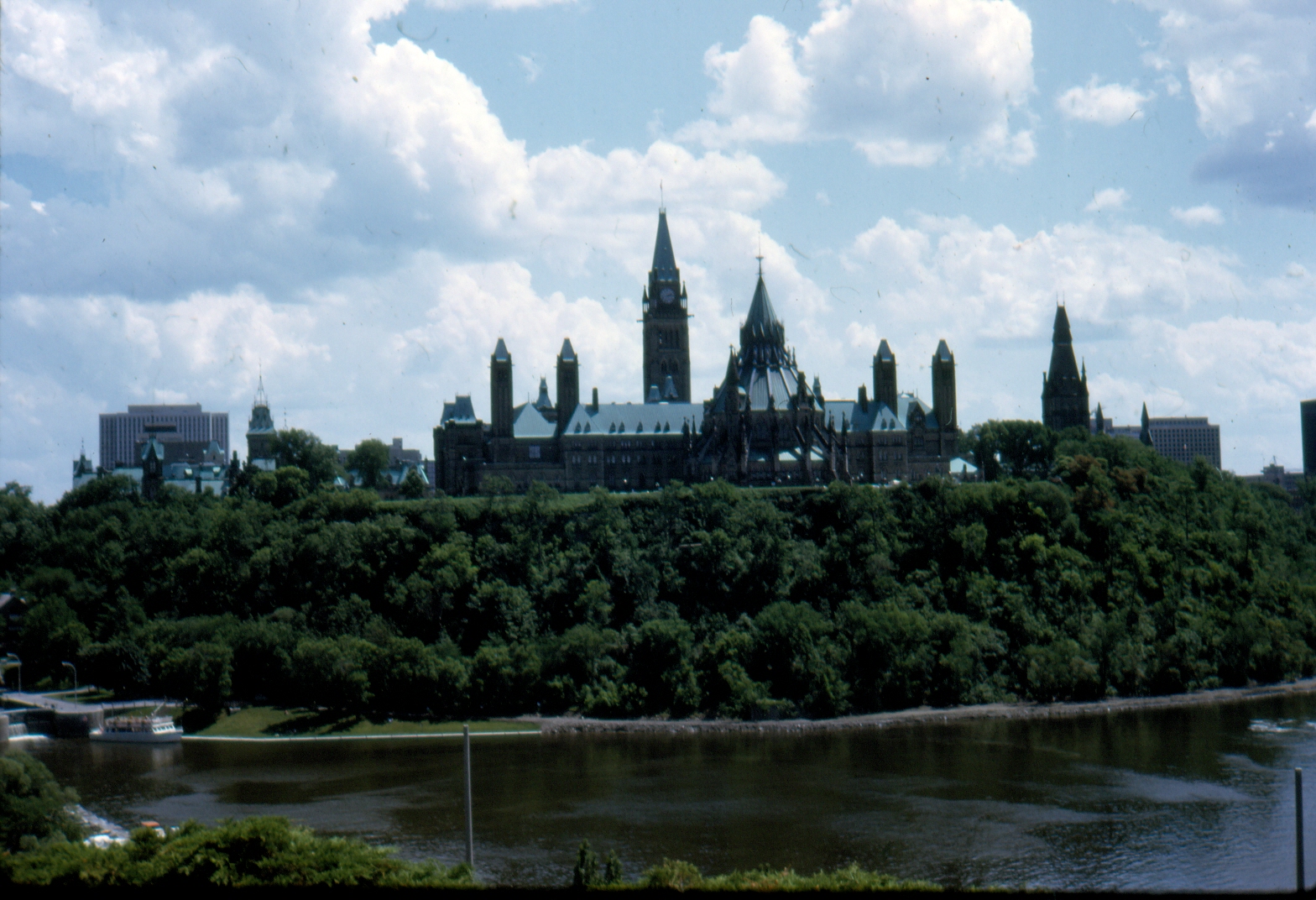 With their euthanasia/assisted suicide Bill C-14 about to be debated in the Canadian House of Commons, Prime Minister Justin Trudeau, Attorney General/Minister of Justice Jody Wilson-Raybould and Health Minister Jane Philpott led the governing Liberal Party in a vote in the House against freedom of conscience for health care providers.
The vote was occasioned by a motion proposed by Conservative M.P. Arnold Viersen of Peace River-Westlock:
Vote No 61, 42nd Parliament, 1st Session, Sitting No. 57, 17 May, 2016
That, in the opinion of the House:
(a) it is in the public interest to protect the freedom of conscience of a medical practitioner, nurse practitioner, pharmacist or any other health care professional who objects to take part, directly or indirectly, in the provision of medical assistance in dying;
(b) everyone has freedom of conscience and religion under section 2 of the Canadian Charter of Rights and Freedoms;
(c) a regime that would require a medical practitioner, nurse practitioner, pharmacist or any other health care professional to make use of effective referral of patients could infringe on the freedom of conscience of those medical practitioners, nurse practitioners, pharmacists or any other health care professional; and
(d) the government should support legislation to protect the freedom of conscience of a medical practitioner, nurse practitioner, pharmacist or any other health care professional.
Not all members of all parties were present in the House when the vote was taken. Since MPs may be absent during a vote for various reasons, it is not possible to establish to what extent absenteeism reflected indecision or unwillingness to vote against a party line on the part of individual members.
96 opposition MPs supported freedom of conscience:
Conservatives (98 members): 90/90 present
New Democratic Party (44 members): 5/40 present
Green Party (1 member): 1/1 present
214 MPs opposed freedom of conscience:
Bloc Quebecois (10 members): 10/10 present
New Democratic Party (44 members): 35/40 present
Liberal Party (184 members): 169/169 present
MPs voting against freedom of conscience
NDP: (Total of 44 elected)
- Niki Ashton
- Robert Aubin
- Sheri Benson
- Rachel Blaney
- Alexander Boulerice
- Marjolaine Boutin-Sweet
- Ruth Ellen Brosseau
- Richard Cannings
- Guy Caron
- Francois Choquette
- David Christopherson
- Nathan Cullen
- Fin Donnelly
- Matthew Dubé
- Linda Duncan
- Pierre-Luc Dusseault
- Scott Duvall
- Randall Garrison
- Cheryl Hardcastle
- Carol Hughes
- Peter Julian
- Jenny Kwan
- Hélène Laverdière
- Brian Masse
- Irene Mathyssen
- Thomas Mulcair
- Pierre Nantel
- Anne Minh-Thu Quach
- Tracey Ramsey
- Murray Rankin
- Romeo Saganash
- Brigitte Sansoucy
- Wayne Stetski
- Kennedy Stewart
- Karine Trudel
Liberal (Total of 184 elected)
- John Aldag
- Omar Alghabra
- Leona Alleslev
- William Amos
- Gary Anandasangaree
- René Arsenault
- Chandra Ayra
- Ramez Ayoub
- Vance Badawey
- Larry Bagnell
- Navdeep Bains
- Frank Baylis
- Terry Beech
- Carolyn Bennett
- Chris Bittle
- Bill Blair
- Randy Boissonnault
- Mike Bossio
- Bob Bratina
- Pierre Breton
- Scott Brison
- Celina Caesar-Chavannes
- Jim Carr
- Sean Casey
- Bardish Chagger
- Francois-Philippe Champagne
- Shaun Chen
- Serge Cormier
- Rodger Cuzner
- Julie Dabrusin
- Pam Damoff
- Matt DeCourcey
- Sukh Dhaliwal
- Anju Dhillon
- Nicola Di Iorio
- Francis Drouin
- Emmanuel Dubourg
- Jean-Yves Duclos
- Terry Duguid
- Julie Dzerowicz
- Wayne Easter
- Ali Ehsassi
- Fayçal Al-Khoury
- Neil Ellis
- Nthaniel Erskine-Smith
- Mark Eyking
- Doug Eyolfson
- Greg Fergus
- Andy Fillmore
- Pat Finnigan
- Darren Fisher
- Peter Fonseca
- Judy Foote
- Peter Fragiskatos
- Colin Fraser
- Sean Fraser
- Stephen Fuhr
- Mark Gerretsen
- Pam Goldsmith-Jones
- Ralph Goodale
- Karina Gould
- David de Burgh Graham
- Raj Grewal
- Ken Hardie
- T.J. Harvey
- Kent Hehr
- Mark Holland
- Anthony Housefather
- Ahmed Hussen
- Gudie Hutchings
- Angelo Iacono
- Mélanie Joly
- Yvonne Jones
- Bernadette Jordan
- Majid Jowhari
- Darshan Singh Kang
- Iqra Khalid
- Kamal Khera
- David Lametti
- Kevin Lamoureux
- Linda Lapointe
- Stéphane Lauzon
- Dominic LeBlanc
- Diane Labouthillier
- Paul Lefebvre
- Denis Lemieux
- Andrew Leslie
- Michael Levitt
- Joël Lightbound
- Alaina Lockhart
- Wayne Long
- Lloyd Longfield
- Karen Ludwig
- Lawrence MacAulay
- Steven MacKinnon
- James Maloney
- Rémi Massé
- Bryan May
- John McCallum
- Karen McCrimmon
- Ken McDonald
- David McGuinty
- John McKay
- Ron McKinnon
- Michael McLeod
- Marco Mendicino
- MaryAnn Mihychuk
- Marc Miller
- Maryam Monsef
- Robert Morrissey
- Joyce Murray
- Eva Nassif
- Robert Nault
- Jennifer O’Connell
- Robert Oliphant
- John Oliver
- Seamus O’Regan
- Denis Paradis
- Joe Peschisolido
- Kyle Peterson
- Ginette Petitpas Taylor
- Jane Philpott
- Michel Picard
- Jean-Claude Poissant
- Carla Qualtrough
- Yasmin Ratansi
- Jean Rioux
- Yves Robillard
- Pablo Rodrguez
- Sherry Romanado
- Anthony Rota
- Kim Rudd
- Dan Ruimy
- Don Rusnak
- Ruby Sahota
- Raj Saini
- Harjit S. Sajjan
- Darrell Samson
- Ramesh Sangha
- Randeep Sarai
- Francis Scarpaleggia
- Peter Schiefke
- Deborah Schulte
- Marc Serré
- Judy A. Sgro
- Brenda Shanahan
- Terry Sheehan
- Jati Sidhu
- Sonia Sidhu
- Gagan Sikand
- Scott Simms
- Amarjeet Sohi
- Francesco Sorbara
- Sven Spengemann
- Marwan Tabbara
- Geng Tan
- Filomena Tassi
- Hunter Tootoo
- Justin Trudeau
- Dan Vandal
- Anita Vandenbeld
- Adam Vaughan
- Arif Virani
- Nick Whalen
- Jonathon Wilkinson
- Jody Wilson-Raybould
- Borys Wrzesnewskyj
- Kate Young
- Selma Zahid
Bloc Quebecois (Total of 10 elected)
- Xavier Barsalou-Duval
- Mario Beaulieu
- Michel Boudrias
- Rhéal Fortin
- Marilène Gill
- Simon Marcil
- Monique Pauzé
- Louis Plamondon
- Gabriel Ste. Marie
- Luc Thériault
Source: Parliamentary web page